When a vacuum pump stops, seal liquid can sometimes flow backward into the process equipment or piping. This is a common issue with liquid-ring and oil-sealed vacuum pumps, and if it is overlooked, it can lead to product contamination, equipment damage, operational downtime, or even safety risks.
This article explains why backflow occurs, the engineering principles behind it, and several practical methods used in chemical plants to prevent it.
Why Backflow Occurs After Shutdown
A vacuum pump removes gas from a process system to create negative pressure.
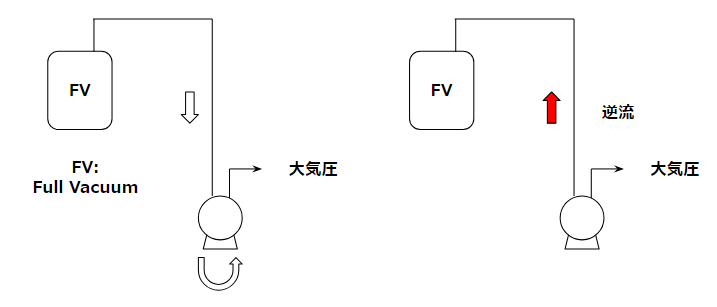
During normal operation, gas continuously flows from the process toward the pump discharge, which is usually vented to atmospheric pressure.
Because this flow direction is maintained while the pump is running, backflow is generally not a concern during operation or startup.
The situation changes immediately after the pump stops.
The process vessel is still under vacuum, while the discharge side remains at atmospheric pressure. This pressure difference naturally drives air back toward the vacuum system.
For liquid-ring vacuum pumps or oil-sealed rotary pumps, this reverse pressure can also carry seal liquid back into the process equipment.
Potential consequences include:
- Product contamination by seal liquid
- Reduced process efficiency
- Contamination from airborne particles
- Fire or explosion hazards when handling flammable materials
Although reverse flow can also occur in high-pressure pumping systems, it is particularly important in batch chemical processes operating under vacuum.
Methods to Prevent Backflow
Several engineering solutions are commonly used to minimize or eliminate reverse flow.
Install a Check Valve
The most common solution is installing a check valve (non-return valve).
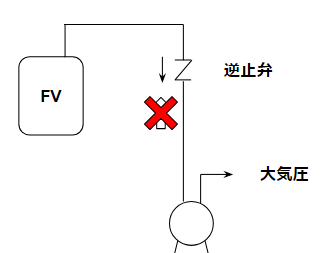
A properly oriented check valve allows gas to leave the process while preventing reverse flow after shutdown.
However, engineers should remember that check valves are not perfect.
Mechanical wear, contamination, or particles trapped in the valve can prevent complete sealing.
For this reason, many engineers view a check valve as an important protective device rather than a guarantee against every possible failure.
Simply replacing it with a manually operated shutoff valve is not always acceptable, because pressure vessel regulations and plant design standards may prohibit manual isolation valves on certain gas service lines.
Increase the Piping Elevation
For liquid-ring vacuum pumps, piping elevation can reduce liquid backflow.
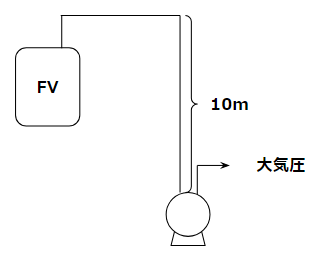
The pump contains seal water during operation.
After shutdown, gravity tends to pull this water back toward the process.
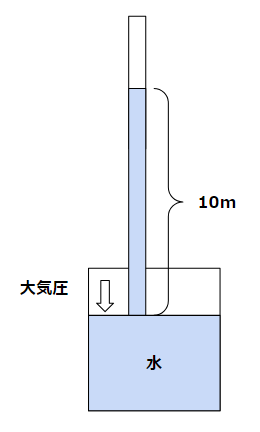
If the vertical piping height approaches approximately 10 meters (33 ft), atmospheric pressure can no longer support a continuous water column beyond this height, following the same principle demonstrated by the Torricelli barometer experiment.
However, this method has limitations.
If the seal liquid volume inside the pump exceeds the volume of the elevated piping, the liquid may still drain back into the system.
Therefore, piping elevation should be considered a supplemental measure rather than a complete solution.
Introduce Gas Through Another Line
Another effective approach is restoring system pressure using another gas source.
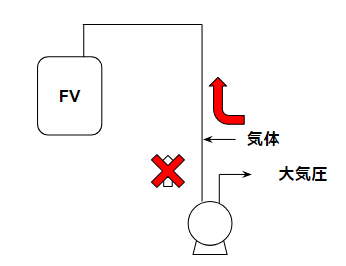
Instead of allowing atmospheric air to enter through the vacuum pump, gas can be introduced through a dedicated process line.
In chemical plants, nitrogen is commonly used because it minimizes oxidation and ignition risks.
For nonflammable processes, compressed air may be an economical alternative.
Pressure equalization significantly reduces the driving force responsible for reverse flow.
Cool the System Before Stopping the Pump
Shutdown sequence is often overlooked.
Many vacuum processes, including vacuum drying and vacuum distillation, operate at elevated temperatures.
If cooling begins after the vacuum pump has already stopped, the gas inside the vessel contracts as temperature decreases.
This lowers the internal pressure even further, increasing the tendency for air or seal liquid to flow backward into the process.
The recommended operating sequence is:
Cool the process first, then stop the vacuum pump.
Following this order greatly reduces the likelihood of backflow.
Conclusion
Seal liquid backflow is a characteristic phenomenon of vacuum systems rather than a pump malfunction.
Because reverse pressure naturally develops when a vacuum pump stops, engineers should anticipate the phenomenon during system design instead of treating it as an unexpected failure.
Preventive measures—including check valves, appropriate piping layout, pressure equalization, and proper shutdown procedures—can significantly reduce operational risks.
Understanding these basic principles helps improve equipment reliability, maintain product quality, and enhance process safety in chemical plants.
About the Author – NEONEEET
A user‑side chemical plant engineer with 20+ years of end‑to‑end experience across design → production → maintenance → corporate planning. Sharing practical, experience‑based knowledge from real batch‑plant operations. → View full profile



Comments