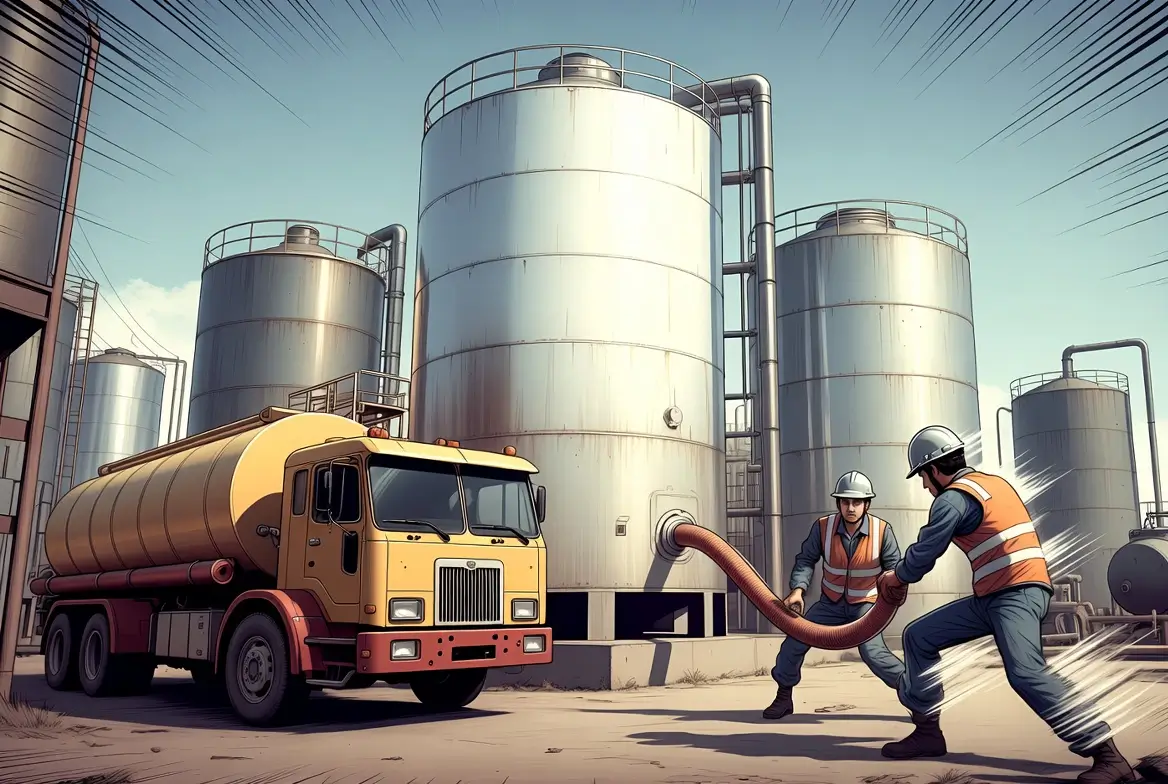
Receiving liquid raw materials or products from a tank truck is one of the most common operations in a chemical plant.
Because these systems are usually installed during the initial construction phase and remain unchanged for years, many engineers and operators simply accept them as standard equipment. However, behind this seemingly simple operation lies a surprising number of safety, environmental, and operational considerations.
One of the most important topics is the handling of vapor during liquid transfer. While attention is often focused on the liquid line itself, vapor management can have a significant impact on both safety and reliability.
This article explains the fundamental engineering considerations that should be understood when transferring liquid from a tank truck to a storage tank.
- Liquid and Vapor Connections Are Both Essential
- Why Closing the Vapor Line Can Be Dangerous
- Problems Occur Even When the Vapor Line Is Omitted
- Connection Points Should Be Easy to Access
- Flexible Hose Connections Require Special Attention
- Familiar Equipment Still Requires Careful Engineering
- Conclusion
- About the Author – NEONEEET
Liquid and Vapor Connections Are Both Essential
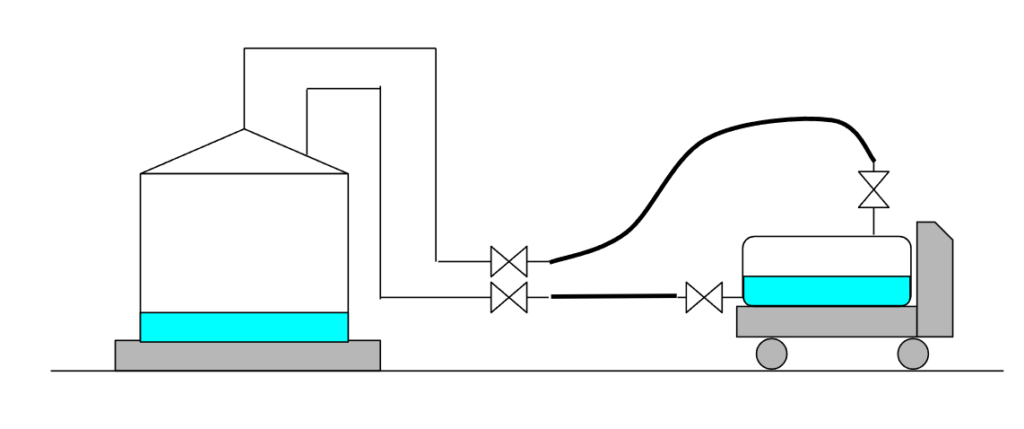
A typical unloading system uses two separate connections between the tank truck and the storage tank:
- A liquid transfer line
- A vapor return line
At first glance, it may seem that only the liquid line is necessary. After all, the purpose of the operation is to move liquid from the truck into the tank.
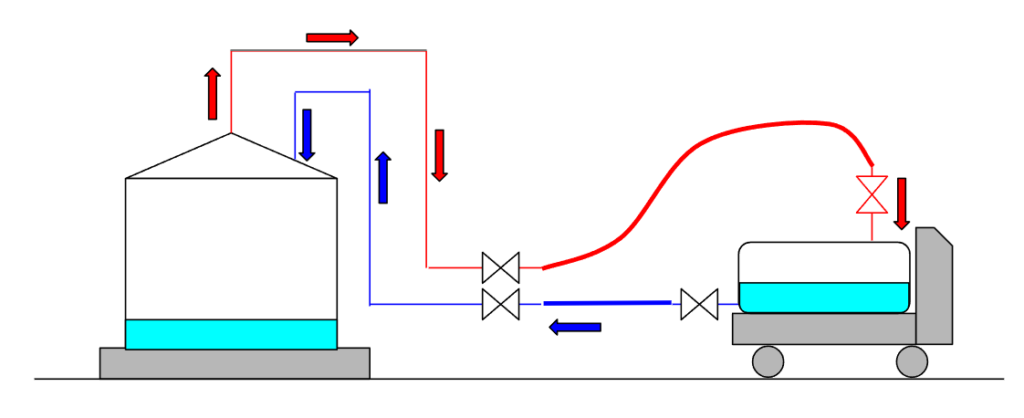
However, every volume of liquid entering the storage tank displaces an equal volume of gas already present inside the tank. Without a path for this gas to move, pressure conditions can quickly become problematic.
For this reason, liquid and vapor are normally handled through separate lines. In modern chemical plants, this arrangement is considered standard practice.
Why Closing the Vapor Line Can Be Dangerous
The importance of the vapor line becomes obvious when considering what happens if it is isolated.
As liquid is pumped into the storage tank, the gas volume inside the tank decreases. If the vapor line is closed, the trapped gas becomes compressed and the internal pressure rises continuously.
Eventually:
- Tank pressure increases significantly
- Mechanical stress is applied to the vessel
- Equipment damage becomes possible
The principle applies to both atmospheric and pressure-rated tanks.
Although modern facilities typically include protective devices, relying on these safeguards is not a substitute for proper unloading system design.
This is one reason why vapor line isolation during unloading operations is generally avoided.
Problems Occur Even When the Vapor Line Is Omitted
Suppose the liquid is transferred without using a vapor return connection.
The storage tank may need to vent gas directly to the atmosphere. Depending on the product being handled, this can create environmental, safety, or regulatory concerns.
At the same time, the tank truck experiences the opposite effect.
As liquid leaves the truck, the internal volume available for gas increases, potentially creating vacuum conditions. Some operators may attempt to relieve this by opening access hatches, but this approach introduces additional risks:
- Air contamination
- Moisture ingress
- Foreign material entry
- Exposure of hazardous materials
A properly designed vapor return system helps avoid these issues while maintaining pressure balance throughout the transfer operation.
Connection Points Should Be Easy to Access
Flexible hoses are commonly used to connect the truck and the storage tank.
Because operators must manually perform these connections, valves and connection points should be located where they can be safely reached.
This may seem obvious, but accessibility is often overlooked during facility design.
Good engineering practice considers not only process requirements but also the actual working conditions faced by operators during routine unloading activities.
Flexible Hose Connections Require Special Attention
Flexible hose systems introduce several potential leak points that must be carefully managed.
Examples include:
- Improper sealing at connection points
- Hose degradation or damage
- Product release during line opening
One often-overlooked issue involves vapor lines.
Many people assume vapor lines contain only gas. In reality, temperature fluctuations can cause vapor condensation inside the piping.
When connection points are located at low elevations, condensate may accumulate over time. Opening a flange or connection unexpectedly can release liquid onto nearby personnel.
To reduce this risk, facilities often implement measures such as:
- Drain valves
- Pre-opening draining procedures
- Collection containers during maintenance work
These details may appear minor, but they contribute significantly to operational safety.
Familiar Equipment Still Requires Careful Engineering
Tank truck unloading systems are so common that they can easily be taken for granted.
However, they involve the interaction of multiple engineering disciplines:
- Pressure management
- Hazardous material handling
- Vapor control
- Operator safety
- Equipment maintainability
The fact that these systems operate successfully every day does not mean they are simple.
Many of the most important design decisions become visible only when abnormal situations occur.
Conclusion
Transferring liquid from a tank truck to a storage tank is a routine operation in chemical plants, but it requires more engineering consideration than many people realize.
The vapor return system is particularly important because it prevents pressure buildup, minimizes emissions, and helps maintain safe operating conditions during unloading.
In addition, connection design, condensate management, and operator accessibility all play critical roles in creating a safe and reliable transfer system.
Sometimes the most familiar pieces of plant equipment are the ones that deserve the closest examination.
About the Author – NEONEEET
A user‑side chemical plant engineer with 20+ years of end‑to‑end experience across design → production → maintenance → corporate planning. Sharing practical, experience‑based knowledge from real batch‑plant operations. → View full profile



Comments