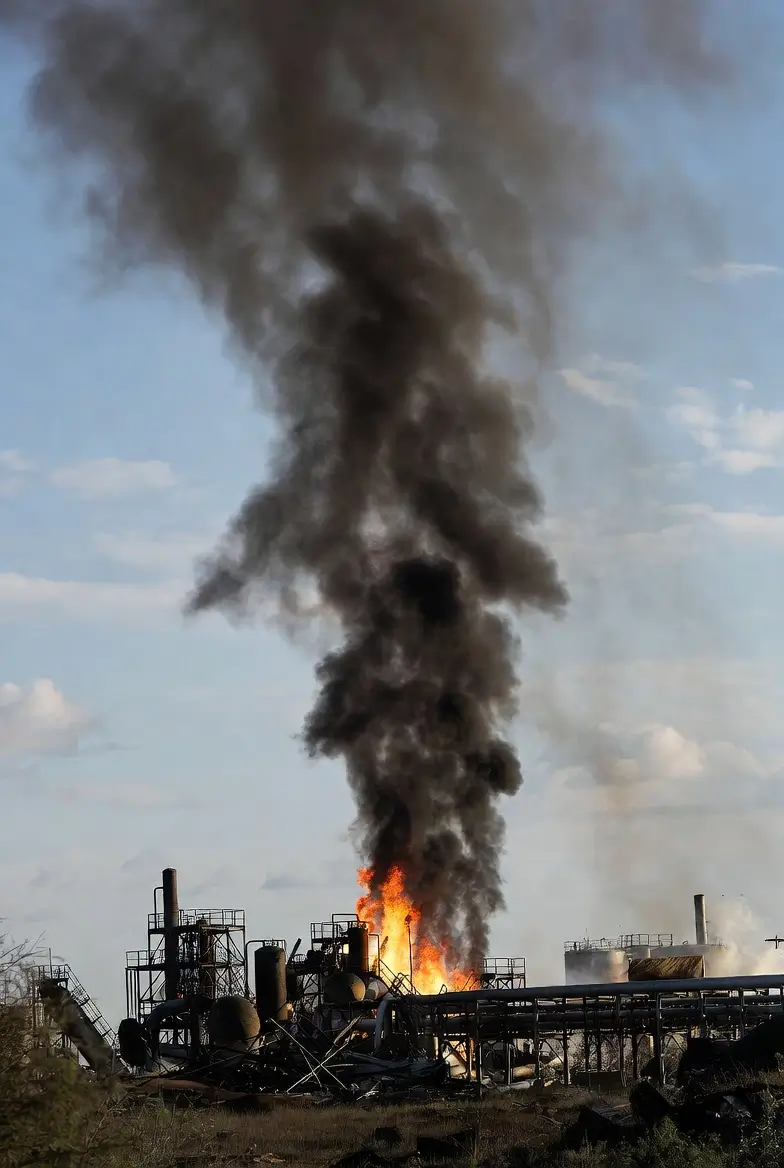
Chemical plants operate under strict safety management every day. However, when natural disasters such as earthquakes, fires, or tsunamis occur, the priority shifts immediately from production to protection — of people, assets, and surrounding communities.
Unlike routine operational incidents, natural disasters are unpredictable in timing and scale. This is why predefined emergency shutdown procedures and disciplined execution are critical. In simple terms, the first response is always the same:
Stop — safely and systematically.
1. Earthquakes: Immediate Stabilization
Because earthquakes strike without warning, response must be automatic.
The first priority is personnel safety. Once immediate danger subsides, the plant transitions to emergency shutdown:
- Isolate raw material feeds
- Stop heating sources
- Maintain or initiate cooling
Most modern facilities implement this via DCS-triggered emergency shutdown sequences. However, digital action alone is not enough. Field patrols to check for leaks, fires, or structural damage are often more critical than control room operations.
Utilities play a decisive role. Even during power loss, emergency generators must support essential functions such as:
- Reactor agitation
- Cooling water circulation
- Environmental mitigation systems
In many reaction systems, continuous cooling is the difference between stability and thermal runaway. Plants that prepare properly calculate emergency power duration against worst-case cooling requirements.
Steam systems are typically forced to stop automatically. Boilers may be prevented from auto-restart to avoid secondary risk.
Storage and logistics areas must isolate valves immediately to prevent large-scale release, especially in outdoor tank farms where hazardous inventories are highest.
2. Fire: Contain, Isolate, Protect the Whole Plant
Unlike earthquakes, fires are usually localized events.
The key difference in response strategy is scope control. The operator at the affected unit focuses on stabilizing and safely shutting down the plant — not directly fighting the fire. Surrounding units may pause operations to support firefighting efforts.
Utilities generally continue running unless they are directly affected. If the fire originates in utility systems, however, a plant-wide shutdown may be required.
Emergency drills are essential here. Fire response is one of the most routinely trained disaster scenarios in industrial environments.
3. Tsunami: Large-Scale Infrastructure Risk
Tsunami response often begins with an earthquake scenario but introduces large-scale flooding risk.
Production shutdown procedures mirror earthquake response. However, physical damage can be significantly greater:
- First-floor pumps may be destroyed
- Sealed rooms may flood
- Cooling water systems may fail
Loss of cooling capacity is often the most critical failure mode. Historical events have demonstrated how devastating this scenario can be when emergency systems are compromised.
The challenge with tsunami mitigation is cost. Designing full resilience against extreme flooding requires substantial investment, and risk evaluation must balance probability and consequence.
4. Flooding: Time-Managed Shutdown
Flooding differs because it usually provides warning time through weather alerts.
Facilities often define staged responses:
- Advisory → controlled safe shutdown
- Warning → evacuation
While flood damage resembles tsunami impact, the key advantage is preparation time.
Recovery: The Often Overlooked Phase
Stopping safely is only half the equation. Recovery requires:
- Structural integrity verification
- Equipment inspection and testing
- Confirmation of cooling and power reliability
- Controlled restart procedures
Premature restart can introduce new risks. Discipline during recovery is as important as discipline during shutdown.
Conclusion
Emergency response in chemical plants is not improvised. It is engineered.
Whether facing earthquakes, fires, or tsunamis, the objectives remain consistent:
- Protect people
- Stabilize reactions
- Maintain cooling
- Prevent escalation
- Prepare for controlled recovery
Behind what may look like “inaction” from outside observers, there are carefully designed systems and trained teams executing predefined strategies.
Preparedness is not visible — until it is needed.
About the Author – NEONEEET
A user‑side chemical plant engineer with 20+ years of end‑to‑end experience across design → production → maintenance → corporate planning. Sharing practical, experience‑based knowledge from real batch‑plant operations. → View full profile



Comments