For mechanical and electrical engineers working in chemical plants, understanding chemical reactions is often seen as outside their core responsibility. However, even a basic understanding of how reactions actually behave in real processes can significantly improve design decisions, operational awareness, and long-term reliability.
This article explains the fundamentals of chemical reactions that non-chemical engineers should know, and more importantly, why they matter in real plant operations.
Basic Chemistry Is More Useful Than You Think
Engineers involved in plant construction or modification often focus on equipment, piping, and control systems, and as a result, they may have limited exposure to the actual products being manufactured or the reactions taking place inside the process.
Chemical reactions are typically considered the domain of chemists or process engineers, and it is easy to assume that they are too complex to understand. While mastering reaction engineering is not necessary, having a basic awareness of how reactions behave can make a meaningful difference in practice.
Even knowing that “reactions are not as simple as they look on paper” is already valuable.
Reactions Are Not As Simple As Equations
In many cases, engineers first encounter chemical reactions through simple reaction equations, such as A turning into B.

At first glance, this appears straightforward, and it may seem that once B is produced, the objective has been achieved. However, in reality, reactions rarely stop there. In many systems, the desired product B continues to react further and transforms into another substance, which we can call C.
From a mechanical or electrical engineering perspective, it is not necessary to fully analyze reaction pathways or kinetics. However, it is important to recognize that even after producing the target product, it may continue to change over time.
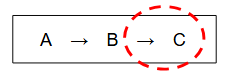
This simple awareness can prevent major misunderstandings in plant design and operation.
Assumptions vs. Reality in Reaction Behavior
A common mental model is that as time progresses, A decreases while B increases in a smooth and predictable manner. While this simplified image is useful, real reactions are far more complex.
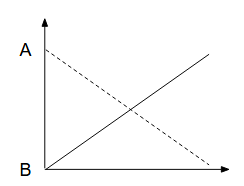
There may be delays between the consumption of A and the formation of B, and more importantly, once B is formed, it may begin to degrade or convert into other substances.
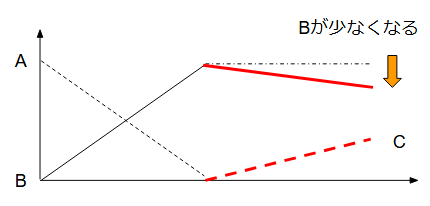
If we consider the formation of C as a form of degradation, then the key point becomes clear: even after successfully producing B, the amount of usable product may decrease over time.
From an industrial perspective, this directly impacts profitability. The goal is not only to produce B, but also to prevent it from converting into unwanted byproducts like C.
This is why process steps such as separation, washing, or quenching are introduced—to stop or slow down further reactions.
For mechanical and electrical engineers, it is helpful to think of this in terms of system design: one part of the system is responsible for reaction, while another part is responsible for stopping or stabilizing it. This separation of functions can simplify both system understanding and maintenance planning.
“Degradation” Happens Everywhere
In many plants, engineers informally describe this phenomenon as something “going bad” over time.
This concept is not limited to the process itself. Even after the product is removed from the system, it may continue to degrade during storage. This is similar to how food or water deteriorates over time.
In other words, degradation is simply another type of reaction, and storage conditions are essentially controlled reaction environments.
Understanding this helps engineers connect plant operations with downstream considerations such as quality control, logistics, and product lifecycle.
In some cases, degraded material can be reprocessed and returned to the system, but if the plant was not originally designed for this, additional equipment may be required later. This is often the point where mechanical and electrical engineers become involved again during plant modifications.
Conclusion
Mechanical and electrical engineers do not need deep expertise in chemical reaction engineering, but understanding a few key concepts—such as reaction progression, side reactions, and product degradation—can significantly improve decision-making in plant design and operation.
By looking beyond simple reaction equations and considering how reactions behave over time, engineers can contribute to safer, more efficient, and more reliable systems.
Even a basic awareness of these principles can open the door to better engineering judgment in real-world plant environments.
About the Author – NEONEEET
A user‑side chemical plant engineer with 20+ years of end‑to‑end experience across design → production → maintenance → corporate planning. Sharing practical, experience‑based knowledge from real batch‑plant operations. → View full profile



Comments