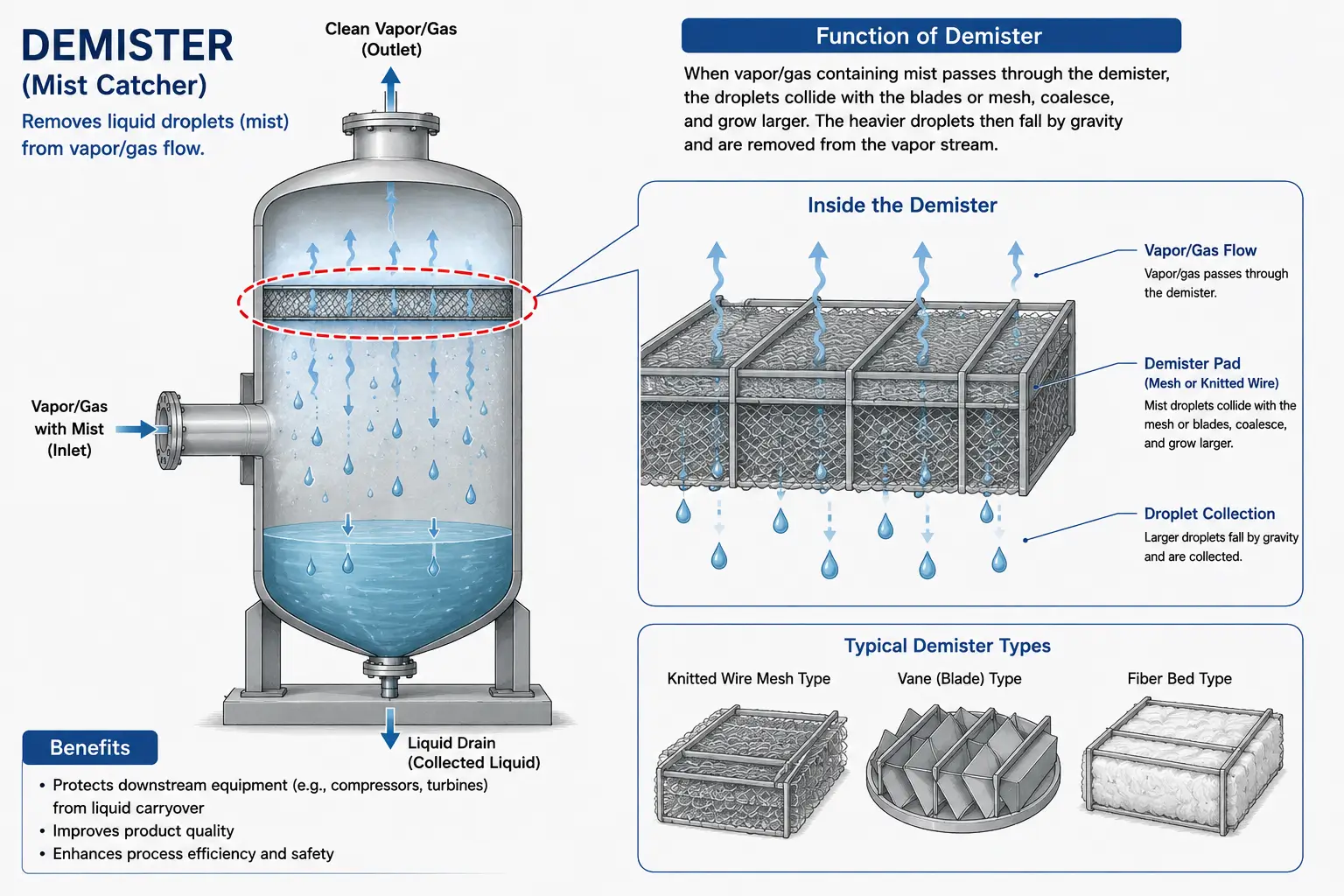
In chemical plants, properly removing liquid droplets from gas streams is essential for protecting downstream equipment and maintaining stable process operation.
A demister, also known as a mist eliminator, is a simple but important device used to separate liquid droplets from gas. However, engineers who mainly work with batch plants may not have many opportunities to design or select one themselves.
This article explains the basic principles of demisters and the key factors to consider when selecting one, including installation location, gas and liquid flow rates, temperature, pressure, droplet size, and material compatibility.
The goal is not to provide a detailed manufacturer-specific design calculation, but to explain the engineering thought process behind demister selection.
1. How Does a Demister Work?
A demister is a device used to separate liquid droplets from a gas stream by mechanical separation.
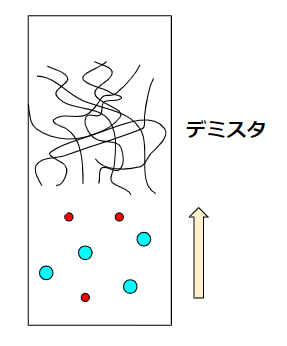
In simple terms, it is essentially a mesh installed in the gas flow path.
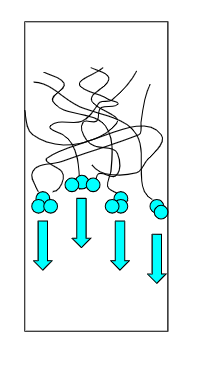
A typical wire-mesh demister consists of a large number of fine wires arranged inside a vessel or pipe. Gas containing entrained liquid droplets passes through the mesh, usually in an upward direction.
Liquid droplets in the gas stream have different diameters. Larger droplets are more easily captured by the mesh, while very small droplets can pass through it.
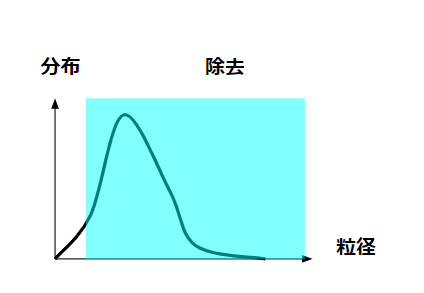
In this sense, a demister works somewhat like a filter, but its separation mechanism is different from conventional filtration.
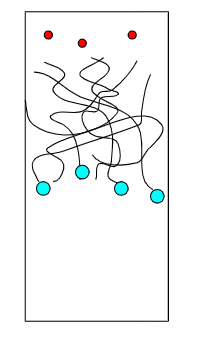
When liquid droplets collide with the wire mesh, they coalesce into larger droplets. Once the droplets become sufficiently large, gravity causes them to drain downward through the mesh.
The separation behavior is closely related to terminal velocity.
The settling behavior of a droplet depends on factors such as droplet diameter, liquid density, gas density, and gas viscosity. A simplified relationship can be expressed as:
$$ u=\frac{gD^2(ρ_g-ρ)}{18μ} $$
where (u) is the terminal velocity, (D) is droplet diameter, (\rho_l) is liquid density, (\rho_g) is gas density, and (\mu) is gas viscosity.
In many chemical plant applications, the fluid properties do not vary dramatically, because common combinations include air or nitrogen as the gas and water or organic solvents as the liquid.
Therefore, gas velocity and droplet size become particularly important factors when evaluating demister performance.
2. Where Should a Demister Be Installed?
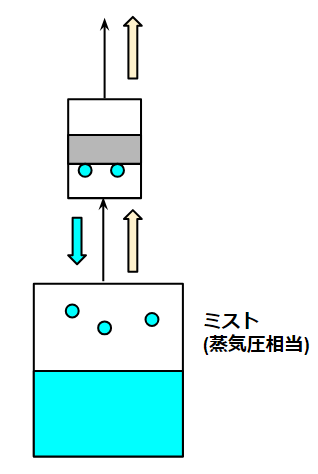
A demister is commonly installed in the gas outlet at the top of a vessel or tank.
The basic concept is straightforward: gas flows upward while separated liquid drains downward under gravity.
This arrangement allows the captured liquid to return to the vessel rather than accumulate in the gas line.
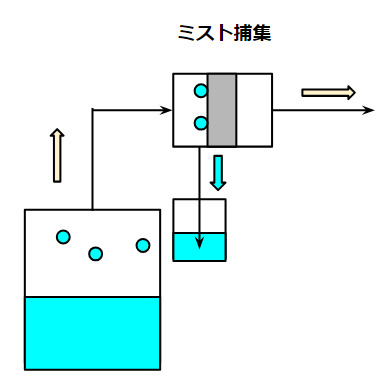
Horizontal installation is also possible in some applications, but it requires more careful consideration because captured liquid may accumulate in the demister rather than drain naturally.
In such cases, a suitable liquid drainage arrangement may be required.
For this reason, vertical installation is generally the simpler arrangement when the process configuration allows it.
3. How Do You Determine the Flow Rate?
One of the most important inputs for demister selection is the gas flow rate.
The gas leaving a vessel may contain vaporized liquid as well as the main process gas.
For example, consider a simple case where a tank contains water at 30°C and atmospheric pressure, while nitrogen is supplied at 30°C at a flow rate of 100 L/min.
At approximately 30°C, the vapor pressure of water is around 4 kPa. Therefore, the gas leaving the tank can be approximated as a mixture of nitrogen and water vapor.
For a simplified calculation:
| Component | Flow rate | Partial pressure |
|---|---|---|
| Nitrogen | 100 L/min | 96 kPa |
| Water vapor | ? | 4 kPa |
Using the ratio of partial pressures as a simple approximation:
4/96×100=4.2 L/min
This gives an approximate water-vapor flow of 4.2 L/min under the simplified assumptions.
However, this represents vapor, not necessarily liquid mist.
The amount of liquid mist reaching the demister depends on several additional factors, including gas velocity, vessel conditions, droplet generation, piping configuration, and droplet size distribution.
Important factors affecting the mist load immediately upstream of the demister include:
- Gas flow rate and liquid vapor pressure
- Gas-line diameter
- Pressure drop in the gas line
- Droplet terminal velocity
- Droplet size distribution
This is where piping design becomes important.
If the gas flow rate is fixed, the gas velocity changes with pipe diameter. A larger diameter generally reduces gas velocity and pressure drop, which can help larger droplets separate by gravity before reaching the demister.
A demister itself also creates pressure drop because the mesh occupies part of the available flow area.
Therefore, the demister is often selected with a larger cross-sectional area than the connecting pipe so that gas velocity through the mesh remains within an appropriate range.
In practice, detailed demister sizing is usually best performed with the manufacturer’s design data and selection criteria.
The process engineer or equipment engineer should normally provide the manufacturer with information such as gas flow rate, gas and liquid composition, operating temperature, operating pressure, and, if available, the target droplet size to be removed.
The manufacturer can then use these conditions to determine the appropriate demister diameter, mesh density, thickness, pressure drop, and expected separation performance.
4. Why Is Temperature Important?
Temperature is an important parameter because it directly affects vapor pressure.
As temperature increases, the vapor pressure of a liquid generally increases. Consequently, more of the liquid can exist in the gas phase.
This is one reason why chemical plants frequently use condensers and heat exchangers to cool process gases and recover condensable components.
For demister design, temperature therefore affects not only the physical properties of the gas and liquid but also the amount and nature of the material present in the gas stream.
The operating temperature should always be specified when requesting a demister from a manufacturer.
5. How Does Pressure Affect Demister Selection?
For many batch chemical plant applications, demisters may operate close to atmospheric pressure.
However, the situation changes significantly under vacuum or high-pressure conditions.
A demister is a relatively lightweight internal structure, so it must be mechanically supported against the differential pressure that can occur across the mesh.
Under vacuum conditions, for example, a pressure difference can cause the mesh pad or its support structure to deform if it is not properly designed.
For applications involving significant vacuum or pressure, the mechanical design of the demister support becomes important, and manufacturer consultation is recommended.
In some applications, especially where robust liquid-gas separation is required under difficult operating conditions, a dedicated separator vessel may be a more reliable solution than relying only on a demister installed in a tank outlet.
6. How Do You Select the Material?
Material selection can be one of the most difficult parts of demister design.
Stainless steel wire mesh is widely available and is suitable for many applications, which makes it a common choice.
However, strongly corrosive services can require more specialized materials.
Depending on the chemical environment, materials such as PTFE-based products may be considered, although the range of commercially available products is more limited than for stainless steel.
Another practical approach is to use a stainless steel demister and replace it periodically if the corrosion rate and replacement cost are acceptable.
The appropriate decision depends on the chemical composition, temperature, corrosion environment, required service life, maintenance philosophy, and total cost.
In other words, material selection should not be based solely on the nominal process temperature and pressure. Chemical compatibility and actual operating conditions are equally important.
Conclusion
A demister is a relatively simple device, but selecting the right one requires an understanding of several process and mechanical parameters.
The basic separation mechanism is based on capturing liquid droplets in a gas stream and allowing the collected liquid to coalesce and drain by gravity.
For practical selection, the key parameters include gas flow rate, liquid properties, droplet size, temperature, pressure, pressure drop, installation orientation, and material compatibility.
For chemical plant engineers, the most important point is not to treat a demister as simply a piece of mesh installed in a pipe. Its performance is closely related to gas velocity, droplet size, fluid properties, and the surrounding piping and vessel design.
When the required design conditions are clearly defined, a manufacturer can usually perform the detailed selection. The engineer’s role is therefore to understand which process conditions matter and provide the right information.
Even a simple demister can become an interesting example of how process design, piping design, equipment design, and maintenance considerations come together in a chemical plant.
About the Author – NEONEEET
A user‑side chemical plant engineer with 20+ years of end‑to‑end experience across design → production → maintenance → corporate planning. Sharing practical, experience‑based knowledge from real batch‑plant operations. → View full profile



Comments