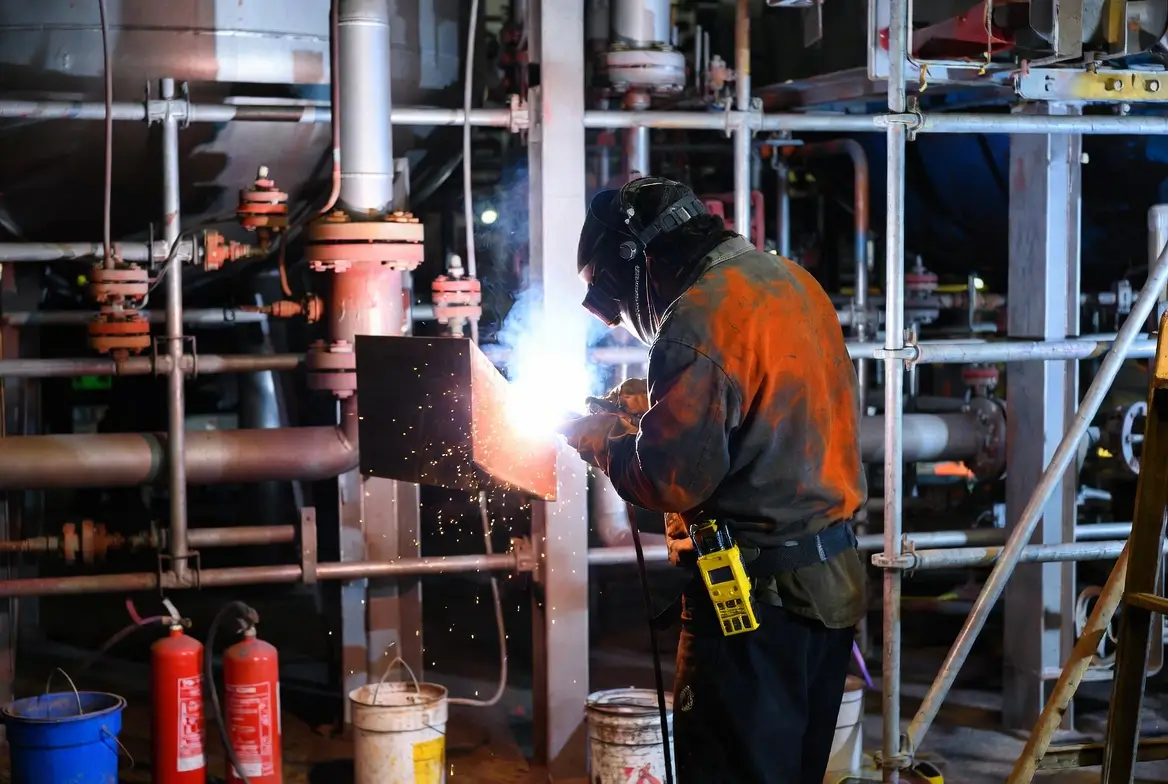
Welding is an essential part of constructing and maintaining industrial facilities. In chemical plants, however, welding is far more than a fabrication process—it is a high-risk hot work activity that directly affects safety, environmental protection, and equipment reliability.
Mechanical engineers working in chemical plants need more than basic welding knowledge. They must also understand the unique hazards associated with performing hot work around process equipment, piping systems, and flammable chemicals.
This article explains seven essential safety checks that should always be completed before welding work begins inside a chemical plant.
- Remove Flammable Materials
- Continuously Monitor Combustible Gas Concentration
- Ensure Adequate Ventilation
- Coordinate with Nearby Work Activities
- Prevent Welding Spark Dispersion
- Keep Firefighting Equipment Within Immediate Reach
- Place the Ground Clamp Close to the Weld
- Conclusion
- About the Author – NEONEEET
Remove Flammable Materials
The first and most important requirement before any welding work is the complete removal of flammable materials.
Chemical plants handle numerous solvents and combustible chemicals that can ignite from welding sparks or heat. Equipment containing flammable liquids should be thoroughly cleaned and isolated before work begins.
From the contractor’s perspective, it is good practice to request documented confirmation that cleaning has been completed.
Removing process chemicals alone is not enough. Paper, cardboard, plastics, insulation materials, and other combustible items should also be cleared from the work area.
Since welding contractors often work in unfamiliar facilities, they should verify that the surrounding environment has been properly prepared instead of assuming it is safe.
Continuously Monitor Combustible Gas Concentration
Even after cleaning, proving that every trace of flammable material has been removed is extremely difficult.
Residual liquid may remain trapped inside dead legs, low points, or complex piping systems. Vapors may also accumulate in confined spaces where they cannot be seen.
Because many solvent vapors are heavier than air, they tend to collect in low areas. Plant modifications, equipment movement, or ventilation changes can suddenly release trapped gas.
For this reason, portable combustible gas detectors should be used continuously during welding—not only before work starts.
Many plants also perform gas surveys throughout the work area before hot work begins. This additional effort reflects the higher safety standards required in chemical processing facilities.
Ensure Adequate Ventilation
Ventilation provides another important layer of protection.
Gas detectors only measure the atmosphere at a specific location. Vapors can still migrate into the work area from nearby equipment or enclosed spaces.
Outdoor process units generally benefit from natural airflow, but partially enclosed structures, temporary work shelters, and indoor facilities often require mechanical ventilation.
Fans or exhaust systems can significantly reduce the risk of flammable vapor accumulation.
Coordinate with Nearby Work Activities
Hot work affects everyone working nearby.
One common hazard occurs when welding and painting are performed simultaneously.
For example, welding sparks falling onto fresh paint or solvent vapors can easily create an ignition source. Likewise, vapors from painting operations may travel downward toward welding activities.
Other nearby work, such as insulation installation involving combustible materials, can also introduce additional fire risks.
Plant owners therefore need to coordinate all scheduled work activities to ensure incompatible jobs are not performed at the same time.
Prevent Welding Spark Dispersion
Besides fire hazards, flying sparks also present risks to personnel.
Workers on the same level or lower floors may suffer burns if sparks reach their work area. Even when injuries are minor, unexpected sparks can startle workers and lead to secondary accidents such as falls.
Unlike fabrication shops where everyone understands welding hazards, chemical plants often involve multiple contractors with different safety cultures.
Spark shields, fire blankets, and protective barriers should therefore be installed to prevent sparks from spreading beyond the work zone.
Keep Firefighting Equipment Within Immediate Reach
Despite every preventive measure, fires can still occur.
Fire extinguishers and water buckets should always be placed close to the welding location so they can be used immediately.
Common mistakes include leaving extinguishers at the first work location after moving elsewhere or preparing water buckets without actually filling them.
Small oversights like these can delay initial fire suppression when every second matters.
Place the Ground Clamp Close to the Weld
The grounding clamp should always be attached as close as possible to the welding location.
Chemical plants contain numerous sensitive control systems, instruments, transmitters, and electrical devices.
If welding current travels unnecessarily through plant structures, it may damage expensive instrumentation or create hidden electrical problems that later affect plant operation.
Keeping the current path short minimizes these risks and protects nearby equipment.
Conclusion
Successful welding in a chemical plant depends as much on preparation as on welding skill itself.
Removing flammable materials, continuously monitoring combustible gas, ensuring proper ventilation, coordinating nearby work, controlling sparks, preparing firefighting equipment, and correctly positioning the grounding clamp all contribute to preventing serious accidents.
Hot work is one of the highest-risk maintenance activities in any process plant. Careful preparation and strict adherence to safety procedures are what make safe welding possible.
About the Author – NEONEEET
A user‑side chemical plant engineer with 20+ years of end‑to‑end experience across design → production → maintenance → corporate planning. Sharing practical, experience‑based knowledge from real batch‑plant operations. → View full profile



Comments