Chilled water is one of the most important utilities in chemical plant operations, as it plays a central role in controlling process temperatures, which directly impacts product quality, safety, and operational stability.
While many mechanical and electrical engineers tend to think of chilled water simply as a refrigeration unit, focusing only on the chiller itself often leads to an incomplete understanding, because in reality, chilled water must be considered as part of an integrated system that includes tanks, pumps, and distribution networks.
This article provides a clear overview of chilled water systems, helping you build a foundation before moving on to detailed equipment design and selection.
5 Essential Utilities in Chemical Plants (for Beginners)
How Industrial Water Is Used in Chemical Plants: A Practical, Application-Based Overview
Steam Is More Dangerous Than You Think|Risks of Burns, Static Electricity, Corrosion, Blockage, and Equipment Damage
Why Nitrogen Is So Useful in Chemical Plants: Uses and Risks Explained
What Makes Instrument Air Special in Chemical Plants?
What Is Chilled Water?
In chemical plants, chilled water typically refers to water cooled by a refrigeration unit to around 5–10°C, and it is often used interchangeably with the term “cold water,” although distinguishing it from cooling water (circulating water) is important to avoid confusion.
Because different temperature ranges of water are used for different purposes in plants, using the term “chilled water” helps clarify its specific role as a low-temperature utility.
How Chilled Water Is Produced
Chilled water is generated by circulating water through a chiller, where heat is removed and the temperature is reduced from ambient to the desired low level.
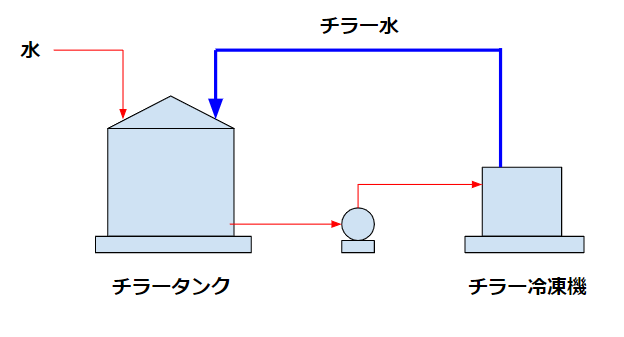
In practice, this requires a circulation loop consisting of a tank, pump, and chiller, where water is continuously recirculated until it reaches a stable operating temperature, which is determined by the balance between heat removal by the chiller and heat input from pumps and ambient conditions.
Even though chillers are typically controlled by temperature sensors that start and stop operation automatically, heat gains from the environment and pump operation cannot be completely eliminated, which is why insulation becomes an important factor in maintaining efficiency and preventing energy loss.
Where Chilled Water Is Used
In chemical plants, chilled water is primarily used to remove heat generated by processes, and it is commonly applied in equipment such as heat exchangers, reactors, and vacuum systems.
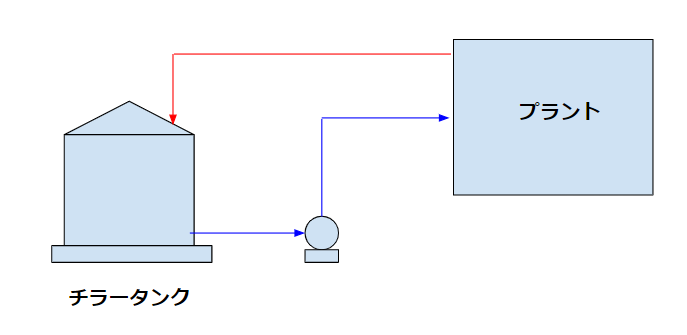
However, instead of using chilled water directly for high-temperature processes, it is standard practice to apply multi-stage cooling, where circulating cooling water is used first to reduce temperature to an intermediate level, followed by chilled water for final cooling, because directly cooling high-temperature streams with low-temperature water would place excessive load on the chiller.
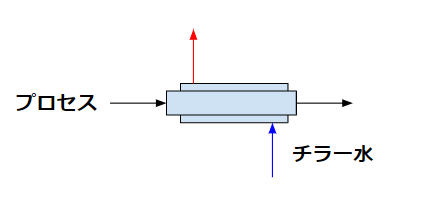
As a result, heat exchangers are often arranged in series, especially in processes such as distillation, reaction, and absorption, while in reactors, chilled water is frequently used in combination with other utilities depending on operating conditions.
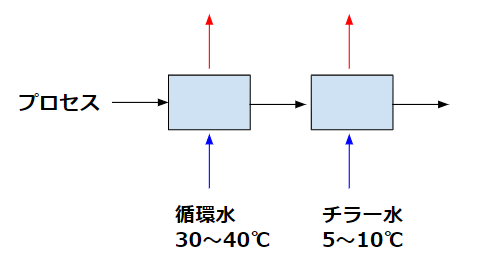
In vacuum systems, particularly liquid-ring vacuum pumps, performance is highly sensitive to water temperature, which makes chilled water especially valuable for maintaining efficiency and stability.
Chiller System Configuration
The arrangement of chillers relative to the chilled water tank significantly affects system behavior, and there are two primary configurations: series and parallel.
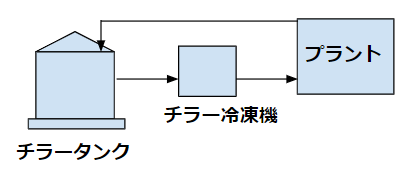
In a series configuration, water flows directly from the tank through the chiller and then to the process, which allows for continuous supply but may result in insufficiently cooled water during startup or fluctuating load conditions, making it less suitable for processes with high initial heat generation.
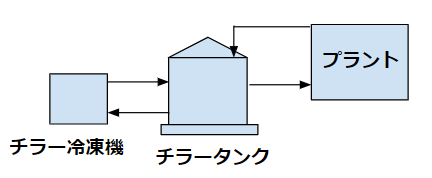
In contrast, a parallel configuration separates the cooling loop from the supply loop, allowing the tank to act as a buffer, which improves stability under varying loads, although it may require additional equipment such as partitioned tanks or multiple tanks, increasing initial investment but providing better performance for batch operations.
Key Design Considerations
Chilled Water Tank
The tank capacity should be determined based on the scale of plant demand, while material selection is also important, with carbon steel (SS400) being cost-effective but prone to corrosion, and stainless steel (SUS304) offering better long-term reliability.
Because chilled water systems operate continuously, issues such as dissolved oxygen, water quality degradation, and biological growth must also be considered, making chemical treatment and nitrogen blanketing potential options.
Chilled Water Pump
Centrifugal pumps are commonly used due to their efficiency, simplicity, and suitability for large flow rates, although in specialized applications such as HVAC or leak-sensitive systems, seal-less pumps like canned motor pumps may be preferred.
Given that chilled water is a critical utility, connecting pumps to emergency power systems is often recommended to ensure continuous operation during power outages.
Chiller Units
From a user perspective, design flexibility for chillers themselves is somewhat limited, but recent trends favor air-cooled chillers due to their energy efficiency and ease of installation, making them an attractive option in many modern plants.
Final Thoughts
Chilled water is not just a cooling medium but a core utility that directly influences plant performance and safety, and therefore it must be designed and operated as a complete system rather than as a standalone piece of equipment.
Understanding how chilled water interacts with processes, equipment, and environmental conditions is essential for achieving stable and efficient plant operation.
Summary
Chilled water serves as a primary cooling utility in chemical plants, and its effectiveness depends on system-level design that includes chillers, tanks, and pumps, while staged cooling with circulating water is a common strategy to optimize efficiency, and system configuration plays a key role in handling load variations and ensuring stable operation.
About the Author – NEONEEET
A user‑side chemical plant engineer with 20+ years of end‑to‑end experience across design → production → maintenance → corporate planning. Sharing practical, experience‑based knowledge from real batch‑plant operations. → View full profile



Comments