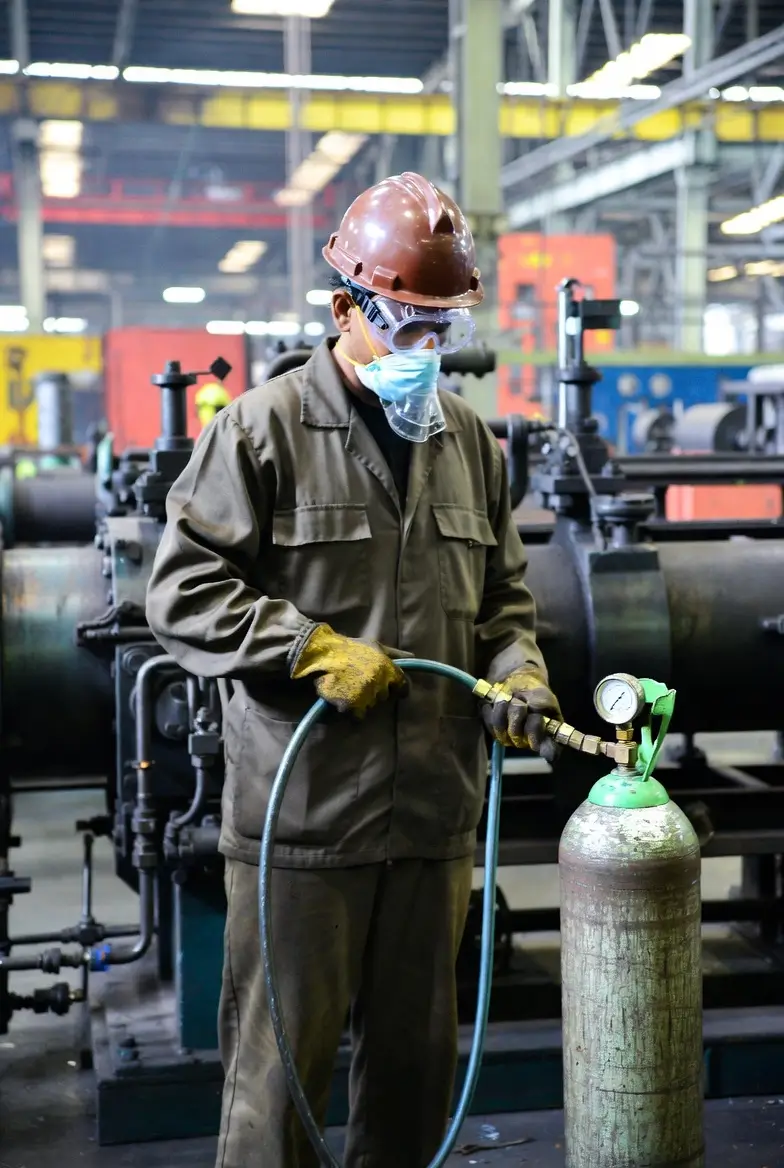
Nitrogen is a very familiar gas because it makes up most of the air around us. However, in chemical plants it plays a critical role in supporting both safe operation and stable processes.
Nitrogen is used in many situations, such as preventing electrostatic ignition, blowing liquids out of pipelines, and performing leak tests on equipment. At the same time, because nitrogen displaces oxygen, it also carries a serious risk: asphyxiation.
In this article, we will explain in a practical and easy-to-understand way why nitrogen is so useful in chemical plants and what engineers and operators should be careful about when handling it.
5 Essential Utilities in Chemical Plants (for Beginners)
How Industrial Water Is Used in Chemical Plants: A Practical, Application-Based Overview
Steam Is More Dangerous Than You Think|Risks of Burns, Static Electricity, Corrosion, Blockage, and Equipment Damage
What Makes Instrument Air Special in Chemical Plants?
Why Chilled Water Is Critical in Chemical Plants: Roles, Applications, and Design Fundamentals
Static Electricity Prevention
One of the most important uses of nitrogen in chemical plants is preventing electrostatic ignition.
Many plants handle large amounts of flammable liquids such as Class 4 hazardous materials. When these liquids are mixed, agitated, or transferred through piping, static electricity can build up. If oxygen is present, the accumulated static charge can ignite flammable vapors and lead to fires or explosions.
For this reason, process systems are often purged with nitrogen before operation begins so that oxygen inside the system is replaced by an inert atmosphere.
In batch plants, nitrogen purging may even be performed at the beginning of every batch. However, purging once is not enough. During operation, nitrogen is often supplied continuously in small amounts to prevent air from entering the system.
For example, when liquid is added to or removed from a storage tank, nitrogen is introduced to maintain pressure and prevent air from being drawn into the tank. Because of this role, nitrogen is considered a minimum required utility in many chemical plants. If nitrogen supply stops, plant operation may also have to stop.
Liquid Blowing (Pipeline Purging)
Nitrogen is also widely used for blowing liquids out of pipelines.
Even when liquids are transferred using pumps, some amount of liquid always remains inside the piping. If this residual liquid accumulates, it can cause product loss, contamination between processes, or operational problems.
To reduce the amount of liquid left in the piping, nitrogen is used to push the liquid out of the pipeline. This process is commonly called blowing.
In batch plants, where piping systems are shared between different steps or products, blowing may be performed after many process steps and sometimes after every batch.
Although compressed air could theoretically be used for blowing, it contains oxygen and may increase the risk of ignition when flammable liquids are present. Therefore, nitrogen blowing is widely used as a safer alternative.
Leak Testing (Gas Tightness)
Nitrogen is also used for gas tightness testing of equipment and piping systems.
Leak testing is essential to ensure that hazardous materials do not escape from the system. If chemicals leak and disperse outside the equipment, they can lead to serious accidents or environmental damage.
When nitrogen is introduced into a system during a leak test, engineers can verify the integrity of the equipment by checking whether nitrogen escapes or whether outside air enters the system.
For low-pressure testing, compressed plant air may sometimes be used. However, for high-pressure leak testing, nitrogen cylinders are typically used because they allow safer and more controlled pressurization.
Beware of Asphyxiation
While nitrogen is extremely useful in plant operations, it also introduces a serious hazard: oxygen deficiency.
Air normally contains about 79% nitrogen and about 21% oxygen. Humans require oxygen to survive. Pure nitrogen, however, contains 0% oxygen.
If a tank or vessel is filled with nitrogen to create an inert atmosphere, the oxygen concentration inside may be extremely low. If someone enters such a space without proper ventilation or oxygen monitoring, they may quickly lose consciousness due to oxygen deficiency.
This risk often appears during maintenance work. For example, after nitrogen has been used in a process, workers may enter a tank to perform cleaning or inspection. If nitrogen isolation is forgotten or oxygen concentration is not properly checked, a dangerous situation can occur.
Because of this, forgetting to isolate nitrogen lines can directly lead to oxygen-deficiency accidents. Proper piping design, clear isolation procedures, and strict confined-space safety management are essential to prevent these incidents.
Summary
Nitrogen plays several important roles in chemical plants:
- Preventing electrostatic ignition by replacing oxygen
- Blowing liquids out of pipelines to remove residual material
- Performing leak tests to confirm equipment integrity
Because of these functions, nitrogen is an essential utility for safe plant operation.
However, its ability to remove oxygen also means it can create dangerous oxygen-deficient environments. Understanding both the usefulness and the risks of nitrogen, and implementing proper operational and safety procedures, is essential when working in chemical plants.
About the Author – NEONEEET
A user‑side chemical plant engineer with 20+ years of end‑to‑end experience across design → production → maintenance → corporate planning. Sharing practical, experience‑based knowledge from real batch‑plant operations. → View full profile



Comments