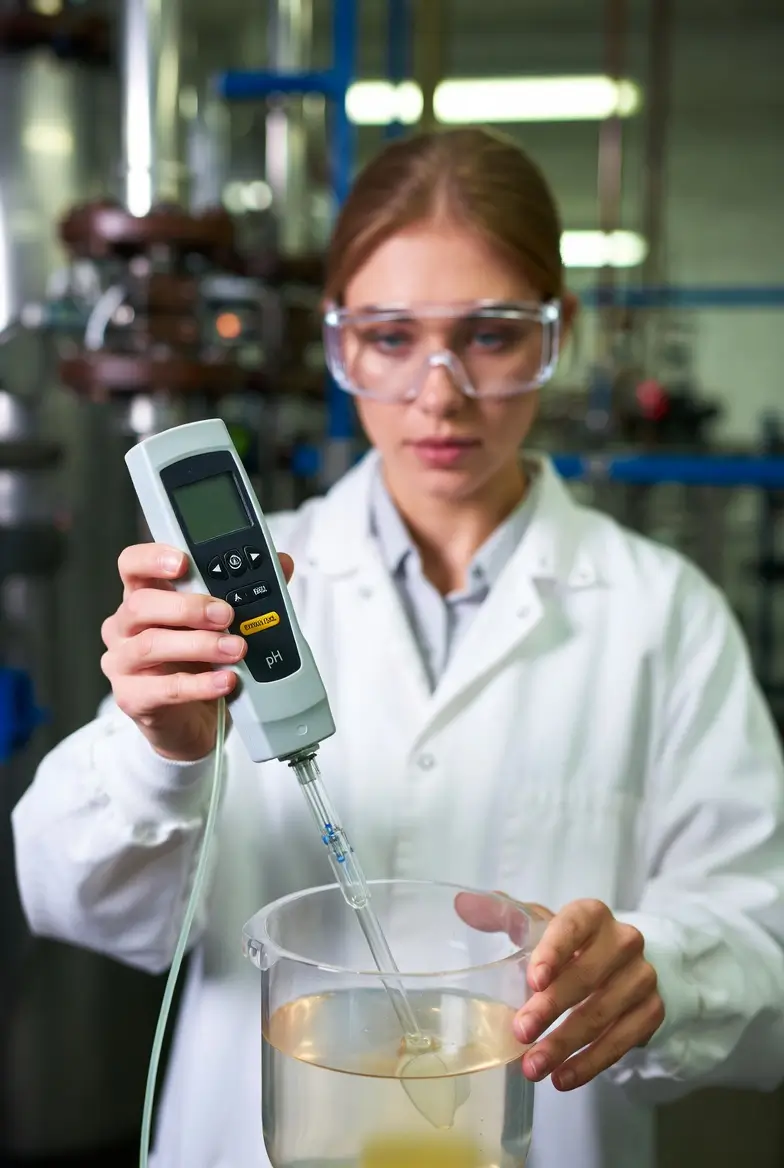
For mechanical and electrical engineers working in chemical plants, instrumentation is often associated with major devices such as pressure, temperature, flow, and level measurement. However, there is another category—often overlooked but critically important—so-called special instruments.
These include conductivity meters, pH analyzers, oxygen analyzers, and gas detectors. While they may not appear frequently in mechanical design tasks, they play a decisive role in safety, product quality, and process control.
Understanding Conductivity in Process Operations
Conductivity represents how easily electricity flows through a substance. In chemical processes, it is closely related to concentration and composition.
In batch plants, conductivity meters are particularly useful for phase separation (e.g., water vs. organic solvents). Since water conducts electricity and most oils do not, conductivity becomes a practical indicator of phase boundaries.
Although it is not perfect—especially for intermediate layers—it provides a valuable support tool alongside level measurements and visual checks.
The Practical Role of pH Measurement
pH is one of the most widely used indicators in chemical processes. It reflects hydrogen ion concentration and indirectly shows reaction progress.
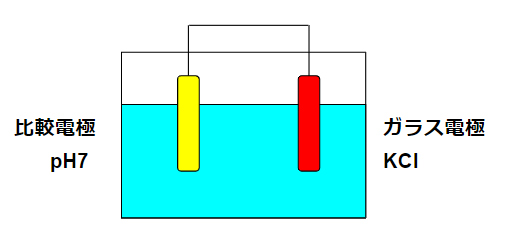
In practice, pH measurement is not direct but based on potential differences using glass electrodes. From a mechanical perspective, the key concern is not the electrochemistry but the physical limitations:
- Glass electrodes are fragile
- Installation location affects reliability
- Maintenance and accessibility are critical
In many cases, installing pH sensors in external circulation lines offers better operability than placing them inside tanks.
Oxygen Concentration and Safety Control
Oxygen analyzers are essential in both safety and process environments.
In air, oxygen concentration is about 21%. However, inside process systems handling flammable materials, oxygen is typically reduced below 5% using nitrogen purging to prevent explosions.
From an engineering standpoint, this creates two critical contexts:
- Safe entry into confined spaces (ensuring sufficient oxygen)
- Safe operation of process systems (ensuring low oxygen)
Measurement technologies such as paramagnetic and zirconia-based analyzers are used, both involving elevated temperatures and requiring careful handling of contaminants.
Gas Detection: The Last Line of Defense
Gas detectors are among the most critical safety instruments in chemical plants.
They are primarily used to detect flammable gases, especially in enclosed or poorly ventilated areas. Since many chemical substances are heavier than air, leaked gases can accumulate near the floor, creating explosion risks.
Two common detection principles include:
- Catalytic combustion (measuring temperature-induced resistance changes)
- Semiconductor-based detection (measuring resistance changes due to gas adsorption)
In both cases, heat plays a role in detection, which introduces additional safety considerations.
Why Mechanical Engineers Should Care
Mechanical engineers may not directly operate these instruments, but their design decisions strongly influence:
- Installation feasibility
- Maintenance accessibility
- Process safety
Ignoring these instruments can lead to design limitations or operational risks later in the plant lifecycle.
Conclusion
Special instruments such as conductivity meters, pH analyzers, oxygen analyzers, and gas detectors may seem secondary compared to core instrumentation, but they are essential for safe and stable plant operation.
Even a basic understanding of their principles, limitations, and installation requirements can significantly improve engineering decisions. For mechanical and electrical engineers, this knowledge bridges the gap between equipment design and real process behavior.
About the Author – NEONEEET
A user‑side chemical plant engineer with 20+ years of end‑to‑end experience across design → production → maintenance → corporate planning. Sharing practical, experience‑based knowledge from real batch‑plant operations. → View full profile



Comments