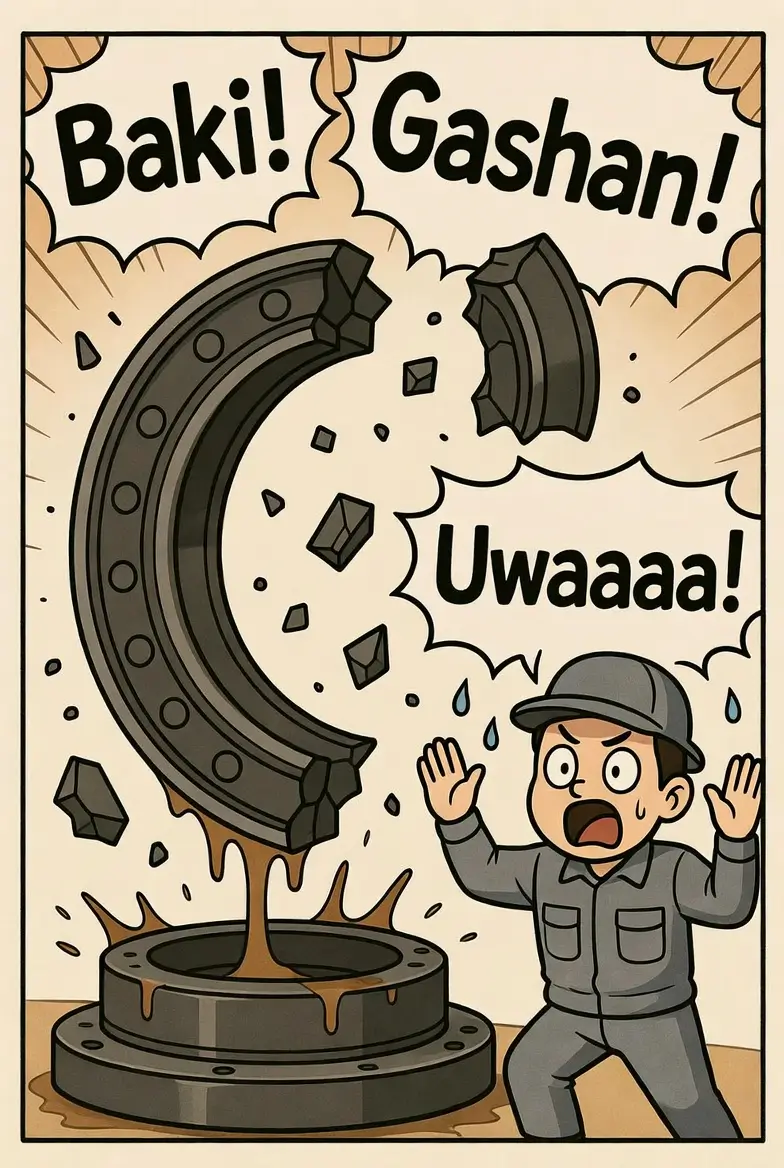
For mechanical and electrical engineers in chemical plants, mechanical seals are among the most troublesome components to manage. Their performance is difficult to quantify, failures are often unpredictable, and reliability improvement efforts do not always produce clear results. When a seal fails, production demands immediate recovery. Afterward, engineers are expected to explain exactly why the failure occurred—often with limited evidence.
In these situations, changing seal manufacturers can seem like an attractive solution. If one supplier’s product failed, perhaps another supplier’s design will perform better. Sometimes this works, but many times it does not.
This article explains why comparing mechanical seal manufacturers in real plant operations is far more difficult than it appears and why maintenance teams often fall into evaluation traps when judging supplier performance.
Specifications Rarely Reveal Meaningful Differences
When purchasing mechanical seals, engineers often compare specifications from different manufacturers. In practice, however, specifications alone rarely provide enough information to predict performance differences.
For pump applications, the selection process typically focuses on basic configuration choices such as:
- Single vs. double seals
- Inside vs. outside mounted seals
- Material compatibility
- Pressure and temperature ratings
Once these requirements are satisfied, identifying a clear performance advantage from a specification sheet becomes difficult.
Detailed drawings may reveal differences in spring arrangements, secondary sealing elements, or face designs. However, if process conditions are understood well enough for these details to matter, they should ideally be specified during the design phase rather than discovered afterward during supplier comparison.
As a result, manufacturer differences are often invisible during procurement.
You Usually Don’t Notice Differences Until Failure Occurs
Mechanical seals have a simple mission: prevent leakage.
As long as a seal performs that function successfully, few people pay attention to which manufacturer supplied it. Operators focus on production, while maintenance teams focus on keeping equipment running.
Interest in manufacturer differences typically appears only after a failure.
When a seal fails unexpectedly, engineers begin searching for alternatives. If another manufacturer’s seal is installed and operates normally, the discussion often ends there.
The common conclusion becomes:
“The replacement works, so the problem must be solved.”
At this stage, there is still little objective evidence that one manufacturer is superior to another.
Even Failure Data Can Be Misleading
Many maintenance teams attempt to evaluate suppliers using service life comparisons.
For example:
- Manufacturer A lasts three years.
- Manufacturer B lasts one year.
If Manufacturer B experiences several similar failures, confidence in that supplier naturally declines.
The problem is that these comparisons often ignore changes that occurred over time.
Between seal replacements, many variables may change:
- Raw material characteristics
- Process conditions
- Operating procedures
- Maintenance practices
- Production rates
- Personnel experience
A comparison such as “A → B → A” may span five years or more. During that period, the process itself may have evolved significantly.
Consequently, concluding that a particular manufacturer caused the problem may be convenient, but it does not necessarily prove anything.
A truly fair comparison would require nearly identical operating conditions, similar equipment, and long-term parallel evaluation—conditions that rarely exist in actual chemical plants.
Replacing Equipment Does Not Automatically Solve the Problem
When failures occur repeatedly, many engineers believe replacement is the safest solution.
Replace the seal.
Replace the pump.
Start fresh.
While this approach may reduce risk, it does not always identify the true cause.
One challenge is that institutional knowledge gradually disappears. Startup problems, commissioning issues, and early operational adjustments are often forgotten over time. Documentation may be incomplete, and experienced personnel may move to other roles.
Equipment behavior can also change as systems mature and operating practices evolve.
Because these historical factors are difficult to quantify, accurately isolating manufacturer-related differences becomes extremely challenging.
Manufacturer Performance Changes Over Time
Even if a genuine difference between manufacturers exists today, that difference may not remain permanent.
Many plants develop long-term purchasing habits:
- “We have always used Supplier A.”
- “The previous engineer preferred Supplier A.”
- “Supplier A has worked well for years.”
These assumptions often continue unchallenged until failures begin appearing.
When performance deteriorates, engineers may switch to Supplier B. If problems continue, uncertainty returns. Eventually, it becomes difficult to determine whether failures originate from the seal design, operating conditions, maintenance practices, or simple statistical variation.
Mechanical seals are wear components. Their reliability is influenced by many factors beyond the manufacturer’s name.
Conclusion
Comparing mechanical seal manufacturers sounds straightforward, but real-world evaluation is surprisingly difficult.
Specification sheets rarely reveal meaningful performance differences. Successful operation provides little evidence of superiority, while failure data is often influenced by changing process conditions, operating practices, and the passage of time.
Because of these limitations, maintenance organizations should be cautious about attributing failures solely to a particular supplier. In many cases, the more practical strategy is not to spend excessive effort proving which manufacturer is responsible, but to build systems that allow rapid replacement and recovery when failures inevitably occur.
For critical pump services, resilience, spare-part management, and efficient maintenance execution often create more value than endless debates over which seal manufacturer is best.
About the Author – NEONEEET
A user‑side chemical plant engineer with 20+ years of end‑to‑end experience across design → production → maintenance → corporate planning. Sharing practical, experience‑based knowledge from real batch‑plant operations. → View full profile



Comments