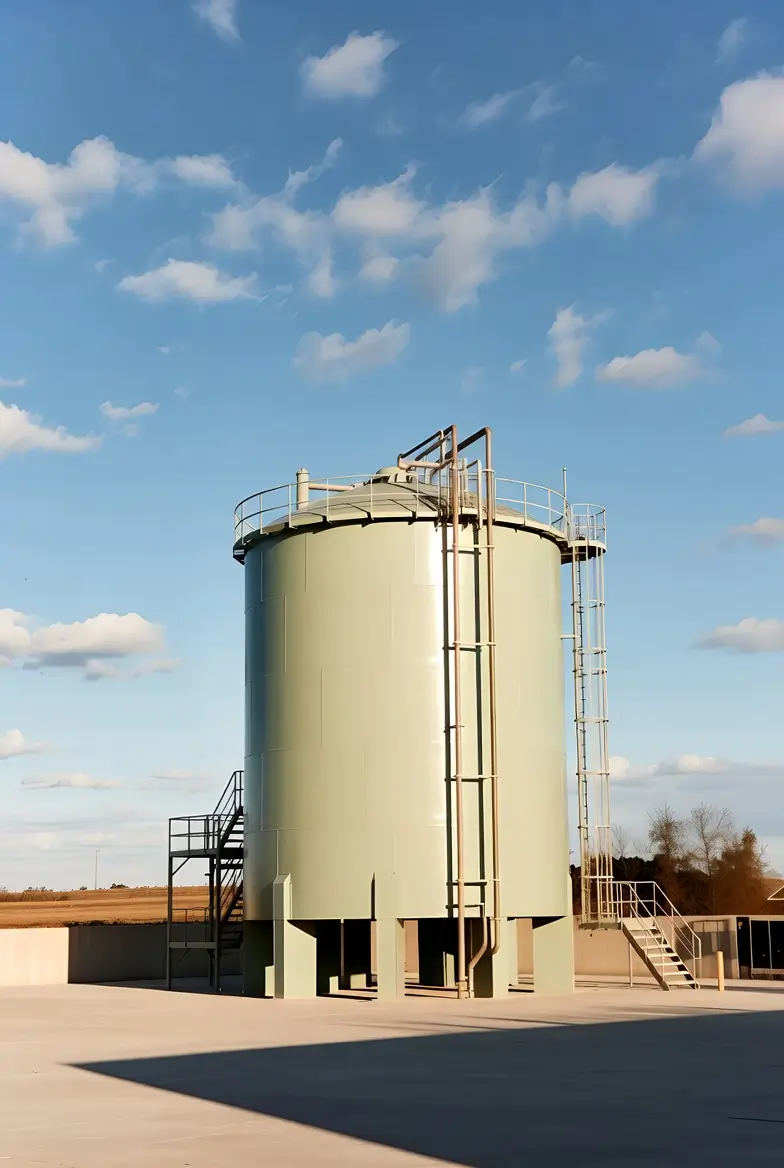
In chemical plants handling hazardous materials, storage tanks are fundamental pieces of equipment. While much attention is typically given to liquid handling and containment, gas line design is often underestimated.
However, the way a gas line is designed directly impacts safety, environmental performance, and long-term operability.
In practice, insufficient consideration of gas line sealing can lead to unnoticed leakage of hazardous substances.
This article explains the basic sealing methods for tank gas lines, along with the often-overlooked risks and the critical importance of downstream gas handling.
Why Gas Lines Matter
When liquid is transferred into or out of a tank, the internal gas must be displaced. This is the role of the gas line.
If this system is not properly designed, it can result in overpressure or vacuum conditions, potentially damaging the tank.
Because of this, gas lines are sometimes designed with a simple philosophy: “as long as gas can flow freely.”
This is where many problems begin.
Common Sealing Methods
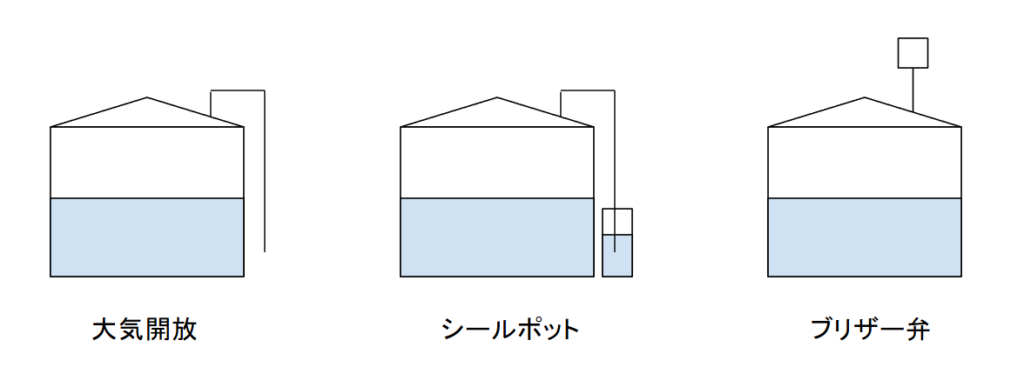
1. Open Vent to Atmosphere
The simplest configuration is to vent directly to the atmosphere.
From a mechanical standpoint, this minimizes the risk of blockage and protects the tank from pressure buildup.
However, from a safety perspective, it is the most hazardous option.
If hazardous materials are present, vaporized substances are directly released into the environment. During filling or draining, fluctuations in liquid level cause corresponding gas movement, leading to continuous emissions.
Because gases are invisible, this risk is often underestimated—but exposure risks for operators and surrounding areas are real.
In many cases, this design choice originates from assumptions made during design, such as “low temperature” or “non-hazardous liquid,” without fully considering actual operating conditions.
2. Seal Pot
A seal pot uses liquid (typically water) to create a barrier at the end of the gas line.
The gas must pass through the liquid, which prevents direct release into the atmosphere.
This is a widely used and practical method.
However, one critical design parameter is the dip depth.
This depth determines the pressure required for gas to escape. If it is too deep, excessive pressure can build up in the tank, creating a risk of rupture.
Additionally, not all hazardous components dissolve completely in the liquid, meaning some emissions may still occur.
In other words, a seal pot reduces risk—but does not eliminate it.
3. Breather Valve
Breather valves maintain tank pressure within a defined range by releasing or admitting gas when thresholds are exceeded.
Like seal pots, they provide sealing under normal conditions and open only when needed.
They offer operational simplicity since no liquid management is required.
However, they are mechanical devices and therefore introduce failure risks.
More importantly, when activated, they release gas to the atmosphere—essentially functioning as controlled open vents.
The Overlooked Issue: Downstream Treatment
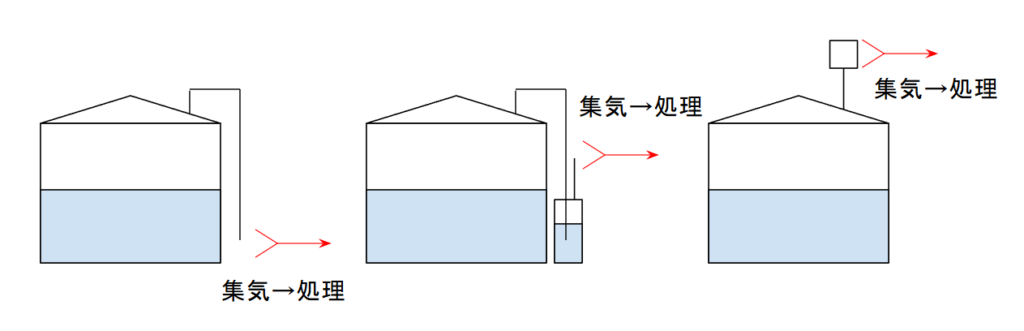
This is the most critical point.
Regardless of the sealing method, gas release is not completely avoidable.
“Sealed” does not mean “zero emissions.”
Therefore, a complete design must include systems to collect and treat vented gases, such as vapor recovery or treatment units.
Without this, even well-designed sealing systems can result in environmental and safety issues.
Not Only Gas—Liquid Leakage Matters Too
Gas emissions are often the primary concern, but liquid carryover should not be ignored.
Small droplets can be entrained in the gas stream and released externally. Over time, this can lead to visible contamination around vent outlets.
Although each release may be small, cumulative effects can result in environmental impact, including contamination of soil and water systems.
Simple operational measures—such as installing collection trays under vent outlets—can help mitigate these risks.
Key Design Mindset
Effective gas line design requires a shift in thinking:
- Do not assume sealing methods eliminate leakage
- Always assume some level of emission will occur
- Design not only for venting, but for handling what is vented
This mindset is what separates a functional design from a truly safe one.
Final Thoughts
Selecting a sealing method—whether open venting, seal pots, or breather valves—is only the starting point.
Each method has inherent limitations, and none can fully prevent leakage.
A robust design considers not only how gas leaves the tank, but how it is managed afterward.
Moving beyond “allowing gas to escape” toward “controlling and treating emissions” is essential for safe and sustainable plant operation.
Summary
Tank gas line design requires more than selecting a sealing method; it demands a comprehensive approach that accounts for inevitable gas and liquid leakage, including proper collection and treatment systems.
About the Author – NEONEEET
A user‑side chemical plant engineer with 20+ years of end‑to‑end experience across design → production → maintenance → corporate planning. Sharing practical, experience‑based knowledge from real batch‑plant operations. → View full profile



Comments