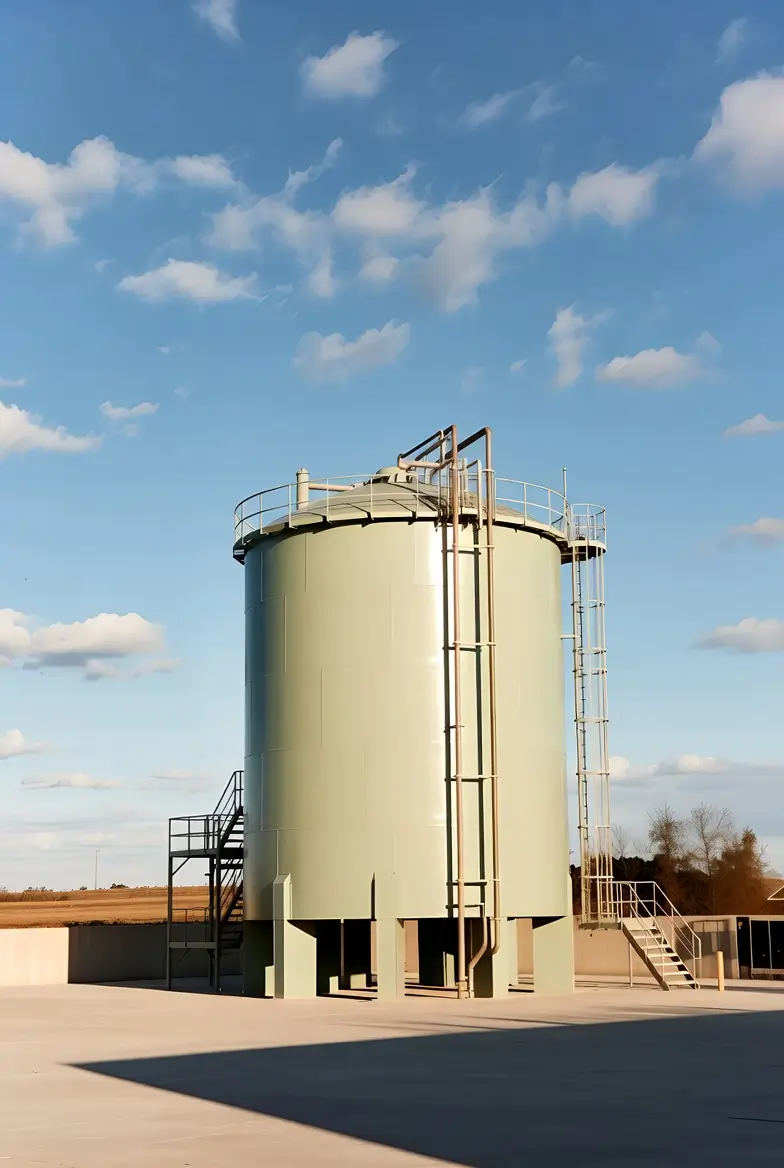
Reinforcement pads (wear plates or reinforcement plates) are a practical and widely used solution to locally improve strength in tank design and maintenance.
In chemical plant tanks, localized risks such as liquid impingement, internal piping effects, deformation, and corrosion are common. Ignoring these during design can lead to long-term reliability issues.
This article explains where reinforcement pads should be installed and highlights the key design considerations engineers should keep in mind.
Essential Tank Terminology for Chemical Engineers|Master the Words Used in Real Plant Design
9 Common Tank Nozzle Design Patterns for Chemical Plants
Tank Nozzle Orientation: Practical Guidelines for Design and Operation
Designing Tank Manholes: Key Points for Safety and Maintenance Efficiency
Pressure Testing in Tanks and Piping: Understanding Leak, Hydrostatic, and Water-Filling Tests
Understanding Design Pressure in Chemical Plant Tanks: A Practical Guide
Tank Structures in Chemical Plants: Essential Terminology You Must Know
Tank Reinforcement Basics: Where to Install Reinforcement Pads and Key Design Considerations
Why Tanks Cannot Be Fully DrainedOperational Issues Caused by Dead Volume and Practical Countermeasures
Why Reinforcement Pads Matter
The primary purpose of a reinforcement pad is simple: to increase local strength.
In most cases, tank strength is largely determined by plate thickness. However, increasing the overall thickness directly impacts cost, so designers aim to keep it at the minimum required level.
That’s where reinforcement pads come in. Instead of increasing thickness everywhere, they allow you to strengthen only the critical areas.
While omitting reinforcement pads may not immediately cause failure, it introduces long-term risks depending on operating conditions and service life. Designing without them can be a deliberate decision, but it requires careful judgment.
Typical Locations for Reinforcement Pads
1. Areas Subject to Liquid Impingement
Even when plate thickness is properly calculated, areas where liquid directly hits the tank wall should be reinforced.
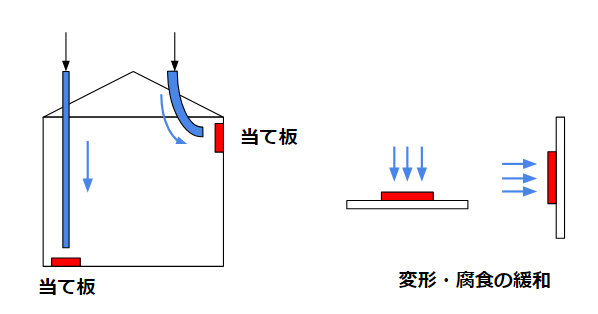
A common approach is to use a reinforcement pad with the same thickness as the tank wall, effectively doubling the local thickness.
This situation often occurs when using an insertion pipe (dip pipe) that discharges fluid near the tank wall. High-velocity fluid impact can cause deformation over time.
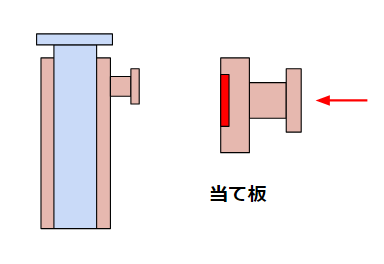
Because tank plates are constrained at the edges, deformation appears as strain rather than displacement, which can:
- Reduce structural strength
- Accelerate corrosion
- Create liquid accumulation points
None of these are desirable in long-term operation.
2. Jacketed Systems and External Flow Areas
Reinforcement pads are also important in jacketed configurations.
For example, in double-pipe or jacketed systems, reinforcement pads are often installed at the inlet of the jacket-side piping.
While pipes are generally less prone to deformation than tank shells, special care is needed for brittle materials such as glass-lined equipment.
In such cases, external fluid forces can lead to cracking. For large equipment like glass-lined reactors, reinforcement pads are essential.
Why Use Insertion Pipes?
Reinforcement pads are often discussed together with insertion pipes, but why are insertion pipes used in the first place?
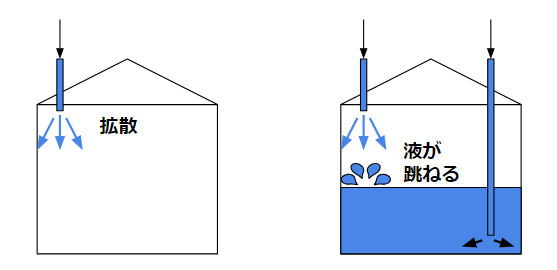
One key reason is to control splashing and flow behavior.
Without an Insertion Pipe
If fluid is discharged near the top of the tank:
- Flow velocity decreases quickly due to dispersion
- However, splashing occurs at the liquid surface
This splashing can generate static electricity, which is a serious concern in chemical plants.
With an Insertion Pipe
When the pipe extends below the liquid level:
- Splashing is significantly reduced
- Static electricity risks are minimized
However, during startup (when the tank is empty), fluid may hit the bottom directly, increasing the risk of deformation.
This is why reinforcement pads are often installed at impact points.
Additional Design Considerations
- Backflow into the insertion pipe can occur → install a breaker hole
- Short insertion pipes targeting the side wall can reduce velocity via wall friction
- Extending pipes to the bottom is difficult after installation → plan early in design
Final Thoughts
Reinforcement pads play a critical role in balancing local strength and long-term reliability in tank systems.
By understanding fluid behavior and internal configurations, engineers can strategically place reinforcement pads to prevent deformation and ensure safe operation.
Even if reinforcement seems unnecessary in the short term, it often becomes a key factor when considering long-term operation and maintenance.
Proper planning at the design stage makes a significant difference.
Summary
Reinforcement pads are an efficient way to enhance local strength without increasing overall tank thickness. They are particularly important in areas exposed to liquid impact, insertion pipe discharge, and jacket-side flow.
Designing these features early helps prevent deformation, corrosion, and operational risks, ultimately improving the safety and longevity of the tank.
About the Author – NEONEEET
A user‑side chemical plant engineer with 20+ years of end‑to‑end experience across design → production → maintenance → corporate planning. Sharing practical, experience‑based knowledge from real batch‑plant operations. → View full profile



Comments