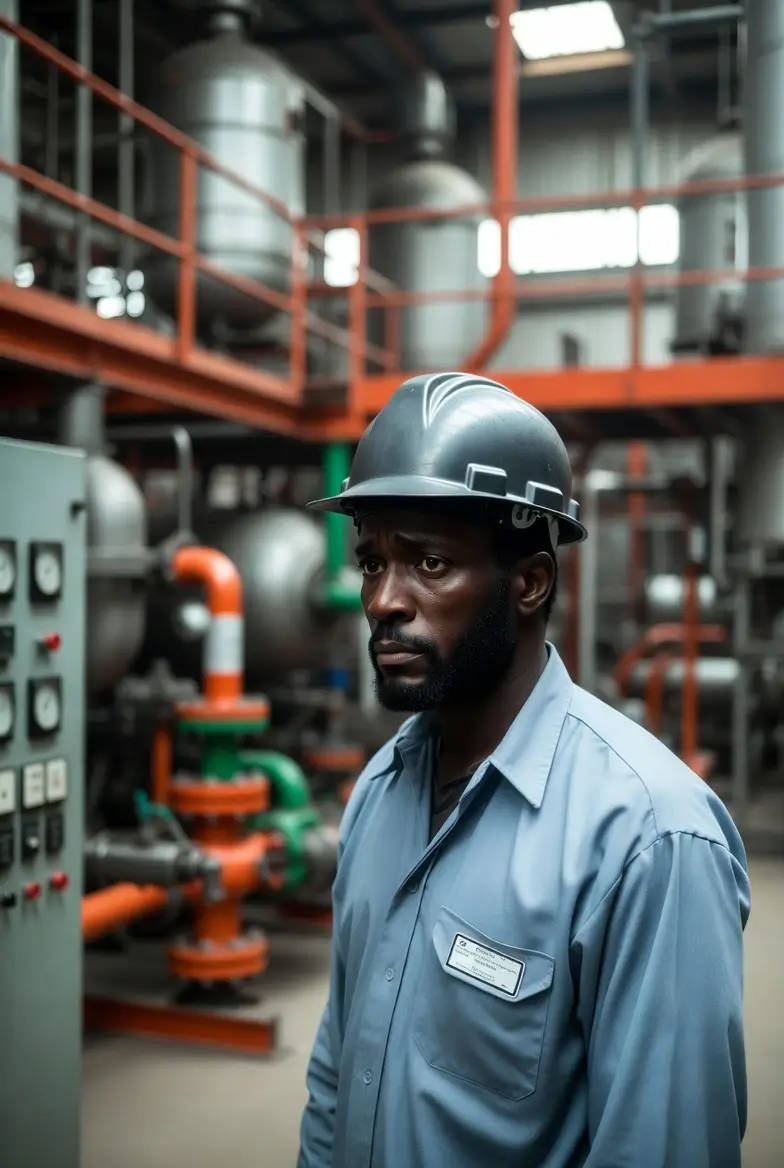
In chemical plants, Owner’s Engineers play an important role in managing, maintaining, and improving the company’s own facilities. They often oversee equipment reliability, coordinate with contractors, and support plant expansion or modification projects.
For engineers with mechanical or electrical backgrounds, working in a chemical plant can be a solid and rewarding career choice. However, like any specialized role, it also comes with unique risks and challenges that are not always obvious at the beginning of the career.
This article explains several risks that engineers should understand before choosing or continuing a career as an Owner’s Engineer, along with practical perspectives on how to deal with them.
Difficulty Absorbing Workload Fluctuations
One structural issue of Owner’s Engineering is the difficulty of balancing workload fluctuations.
If a plant consistently has expansion projects, upgrades, or maintenance work every year, this may not become a problem. However, there is no guarantee that such work will continue for the next 10 or 20 years.
When projects decrease, several scenarios may occur:
- Transfer to another internal department
- Temporary assignment to subsidiaries or affiliated companies
- In extreme cases, difficulty finding a suitable internal role
Because Owner’s Engineers often specialize in plant equipment and engineering tasks, it may be harder to apply those skills directly to unrelated departments.
In contrast, engineers working for engineering contractors or EPC companies often experience a wider variety of projects. Even if one project ends, the company typically finds another project or location. Although that environment has its own challenges (often including overseas work), the range of engineering exposure may be broader.
Frequent Unexpected Work
While a lack of projects can be a concern, sudden increases in workload can be equally difficult.
Owner’s Engineers often experience situations where work increases rapidly but hiring additional staff is not easy. If the workload becomes very large, external engineering companies can be hired. However, there is a common intermediate situation where the workload is slightly too large for internal staff but not large enough to justify outsourcing.
Unexpected tasks—equipment troubles, urgent modifications, or regulatory responses—can disrupt schedules significantly. Many plant engineers become exhausted from constantly responding to these urgent issues.
Over many years, some engineers even become desensitized to this pressure, which is something frequently observed among experienced plant personnel.
Another challenge is specialization. Mechanical and electrical engineers in chemical plants have highly specific expertise, which means:
- There may be few internal alternatives for reassignment
- External support within the company is limited
Compared with process engineers, who often have broader options across production or development roles, equipment engineers sometimes have fewer internal pathways.
Working Almost Exclusively in Plants
Owner’s Engineers typically work at the plant site for most of their careers.
Daily work often involves:
- Wearing work clothes rather than business attire
- Being physically close to production facilities
- Supporting on-site operations and maintenance
While some engineers appreciate the stability of a fixed location, others may feel that their career options become limited.
Occasionally, engineers have the opportunity to work at headquarters or participate in corporate-level projects, but this is not the typical path.
Spending an entire career in plant environments is not necessarily negative, but the lack of exposure to other roles or industries can become a long-term risk if career flexibility becomes important later.
Limited Opportunities to Develop Engineering Design Skills
Another common criticism of Owner’s Engineering roles is that hands-on engineering design experience may be limited.
For example, Owner’s Engineers often do not:
- Create detailed piping drawings
- Design equipment from scratch
- Perform full engineering calculations for projects
In many cases, those tasks are performed by external engineering contractors.
As a result, Owner’s Engineers often work mainly on conceptual planning, review, and coordination rather than detailed design work. In some organizations, even conceptual design is handled by process engineering departments, leaving Owner’s Engineers with limited opportunities to create new designs themselves.
However, Owner’s Engineering also has a unique advantage.
Unlike engineering contractors who mainly focus on project execution, Owner’s Engineers can gain long-term experience in:
- Plant operation
- Maintenance strategies
- equipment planning and lifecycle management
If engineers actively learn these areas, they can develop valuable cross-functional expertise that combines engineering knowledge with plant operation experience.
In chemical plants where equipment expertise is rare, such combined knowledge can become a significant career advantage.
Passive Work Can Slow Career Growth
Because of the nature of the role, Owner’s Engineering work often becomes reactive rather than proactive.
Engineers may find themselves responding to requests from operations, maintenance teams, or management instead of initiating projects independently.
Over time, some people fall into a pattern of “doing only what they are asked to do.”
Since these positions are usually stable and reasonably well-paid, many engineers become comfortable with this situation. However, this passive approach can become risky when:
- internal projects decrease
- organizational restructuring occurs
- career mobility becomes necessary
In those situations, engineers who have not actively developed additional skills may struggle to adapt.
Some engineers eventually change jobs after becoming exhausted by constant reactive work, while others remain in low-activity roles within the company.
Conclusion
Working as an Owner’s Engineer in a chemical plant can be a stable and meaningful career path, particularly for mechanical and electrical engineers interested in plant equipment and operations.
However, the role also comes with specific risks, including workload fluctuations, unexpected tasks, limited design experience, and the possibility of becoming too passive in day-to-day work.
Understanding these challenges early allows engineers to take proactive steps, such as:
- continuously expanding technical knowledge
- learning operations and maintenance strategies
- collaborating with multiple departments
- building flexible career options
By approaching the role with a long-term perspective, Owner’s Engineers can transform these challenges into valuable professional experience.
About the Author – NEONEEET
A user‑side chemical plant engineer with 20+ years of end‑to‑end experience across design → production → maintenance → corporate planning. Sharing practical, experience‑based knowledge from real batch‑plant operations. → View full profile



Comments